
Tagged: Dr. Wafik El-Deiry

How HPV and COVID-19 Spike Proteins May Interact to Impact Cancer Suppression

Thus, the present hypothesis is that virally encoded proteins such as HPV-E6 or SARS-COV-2 Spike may cooperate in suppressing host defenses including tumor suppressor mechanisms involving p53.

The p53 protein plays a central role in preventing cancer by responding to cellular stress and DNA damage. When activated, it can repair damaged DNA or trigger cell death, preventing the survival of potentially malignant cells. Loss of p53 function is a hallmark of many cancers.

HPV is well known to inactivate p53 through its E6 protein, which promotes p53 degradation. This mechanism contributes to HPV-associated cancers, including cervical, anal, and head and neck cancers. SARS-CoV-2, while not traditionally classified as an oncogenic virus, has been shown to interfere with immune function and, in some cases, with cellular pathways that involve p53.

A recent article by Dr. Wafik El-Deiry of The Warren Alpert Medical School of Brown University, published in Oncotarget, proposes a scientific hypothesis suggesting that proteins from HPV and SARS-CoV-2 may both interfere with the body’s tumor-suppressing mechanisms, potentially compounding their effects on cancer-related pathways.

The Hypothesis: HPV E6 and SARS-CoV-2 Spike Proteins May Cooperatively Suppress p53

In the paper, titled “Hypothesis: HPV E6 and COVID spike proteins cooperate in targeting tumor suppression by p53,” Dr. El-Deiry proposes that the SARS-CoV-2 spike protein, whether introduced via infection or mRNA vaccination, may suppress p53 activity in a manner that complements the effects of HPV E6. In individuals with persistent HPV infection, this combined interference could further reduce p53 function, weakening tumor suppression mechanisms.

The Mechanistic Rationale: Dual Viral Impact on p53 and Immune Regulation

The proposed mechanism involves two converging effects on p53. HPV E6 promotes the degradation of p53 protein, while the SARS-CoV-2 spike protein may suppress its transcriptional function. This dual action could further compromise the cellular ability to detect and respond to oncogenic stress.

The hypothesis also considers the broader immunological environment. SARS-CoV-2 infection has been shown to alter innate immune responses, which may indirectly accelerate progression of HPV-related neoplasia or other pre-cancerous states.

The Supporting Observations

Although the hypothesis remains untested, it is based on several converging observations. Laboratory research has shown that the SARS-CoV-2 spike protein can reduce p53-related gene activity, like p21, DR5, and MDM2, and weaken the response of cancer cells to therapy. In addition, a clinical case shared in a public interview by Dr. Patrick Soon-Shiong involved a patient with long-term remission from HPV-associated head and neck cancer who experienced recurrence and liver metastases after COVID-19 vaccination. While this does not establish causality, it illustrates the kind of clinical context in which the hypothesis could be further explored.

The Impact: Potential Implications for Cancer Risk in HPV- Positive Individuals

If validated, this hypothesis may have implications for cancer surveillance in HPV-positive individuals, particularly in the context of SARS-CoV-2 exposure or vaccination. However, as emphasized by the author, there is currently no clinical evidence linking COVID-19 vaccination to increased cancer risk.

This hypothesis is intended to encourage further epidemiological and mechanistic investigations, not to alter clinical recommendations. It proposes a framework for evaluating whether co-exposure to two common viruses may jointly impair p53-mediated tumor suppression in a subset of patients.

Future Perspectives and Conclusion

Dr. El-Deiry outlines two avenues for future research: population-based studies to assess cancer outcomes in HPV-positive individuals following SARS-CoV-2 infection or vaccination, and laboratory experiments to model the combined effects of HPV E6 and spike protein on p53 activity in human cells.

At present, the hypothesis remains speculative but biologically plausible. It highlights the importance of continued research at the intersection of oncology, virology, and immunology, particularly as we learn more about the long-term consequences of widespread viral exposure.

Click here to read the entire hypothesis published by Oncotarget.

_______

Oncotarget is an open-access, peer-reviewed journal that has published primarily oncology-focused research papers since 2010. These papers are available to readers (at no cost and free of subscription barriers) in a continuous publishing format at Oncotarget.com

Oncotarget is indexed and archived by PubMed/Medline, PubMed Central, Scopus, EMBASE, META (Chan Zuckerberg Initiative) (2018-2022), and Dimensions (Digital Science).

Click here to subscribe to Oncotarget publication updates.

For media inquiries, please contact media@impactjournals.com.
Combining Regorafenib and TAS102 to Target Gastrointestinal Cancers and Overcome Cancer Stemness

In this research paper, researchers demonstrate a promising new treatment option for refractory metastatic gastrointestinal cancers using a combination of two FDA-approved drugs.

Researchers Jun Zhang, Lanlan Zhou, Shuai Zhao, and Wafik S. El-Deiry from Fox Chase Cancer Center and Brown University explore the potential of combining TAS102 (trifluridine/tipiracil) and regorafenib as a treatment option for gastrointestinal (GI) cancers. Their research paper, published in Oncotarget’s Volume 15 on July 2, 2024, is entitled, “Regorafenib synergizes with TAS102 against multiple gastrointestinal cancers and overcomes cancer stemness, trifluridine-induced angiogenesis, ERK1/2 and STAT3 signaling regardless of KRAS or BRAF mutational status.”

The Study

The combination of two FDA-approved drugs, TAS102 and regorafenib, has shown promising results in preclinical studies. TAS102 is an oral formulation consisting of trifluridine (FTD) and tipiracil hydrochloride (TPI). It has been approved by the US FDA for the treatment of refractory metastatic colorectal cancer and metastatic gastric cancer. Regorafenib is a multi-target tyrosine kinase inhibitor that inhibits tumor angiogenesis and cell proliferation and is approved for the treatment of gastrointestinal cancers.

Recent studies have shown that TAS102, in combination with regorafenib, can lead to improved survival and restrict tumor progression. The combination therapy has been found effective in multiple gastrointestinal cancer cell lines, including colorectal, gastric, and pancreatic cancers.

Cancer stem cells (CSCs) are a subpopulation of cancer cells that contribute to tumor growth, recurrence, and chemo-resistance. Targeting CSCs can be an effective approach to overcoming therapy resistance and preventing tumor progression. TAS102, in combination with regorafenib, has been shown to reduce the stemness of colorectal cancer cells, inhibiting the formation of colonospheres and reducing the CD133+ subpopulation.

Tumor angiogenesis, the formation of new blood vessels, is essential for tumor growth and metastasis. TAS102 monotherapy has been found to promote angiogenesis in tumors harboring a BRAF mutation. However, when combined with regorafenib, TAS102-induced angiogenesis is abrogated, as regorafenib inhibits the formation of microvessels in xenografted tumors.

The combination therapy of TAS102 and regorafenib regulates several signaling pathways, including ERK1/2 and STAT3, and modulates the expression of thymidylate synthase (TS), which is involved in drug resistance.

Conclusion

The combination of TAS102 and regorafenib shows synergistic effects in preclinical studies, inhibiting tumor growth, reducing the stemness of cancer cells, and inhibiting angiogenesis. Further research is needed to explore the efficacy of this combination therapy in clinical settings and to identify potential biomarkers of drug sensitivity. The TAS102 plus regorafenib drug combination may be further tested in gastric and other GI cancers.

“Recent studies have shown that TAS102 in combination with regorafenib can lead to improved survival and restrict tumor progression.”

Click here to read the full research paper in Oncotarget.

Oncotarget is an open-access, peer-reviewed journal that publishes primarily oncology-focused research papers. These papers are available to readers (at no cost and free of subscription barriers) in a continuous publishing format at Oncotarget.com

Oncotarget is indexed and archived by PubMed/Medline, PubMed Central, Scopus, EMBASE, META (Chan Zuckerberg Initiative), and Dimensions (Digital Science).

Click here to subscribe to Oncotarget publication updates.

For media inquiries, please contact media@impactjournals.com.

Trending With Impact: ONC201 Induces Apoptosis in Breast Cancer

A novel therapeutic combination converts anti-proliferative effects in breast cancer cells to pro-apoptotic.

Trending With Impact: ONC201 Induces Apoptosis in Breast Cancer
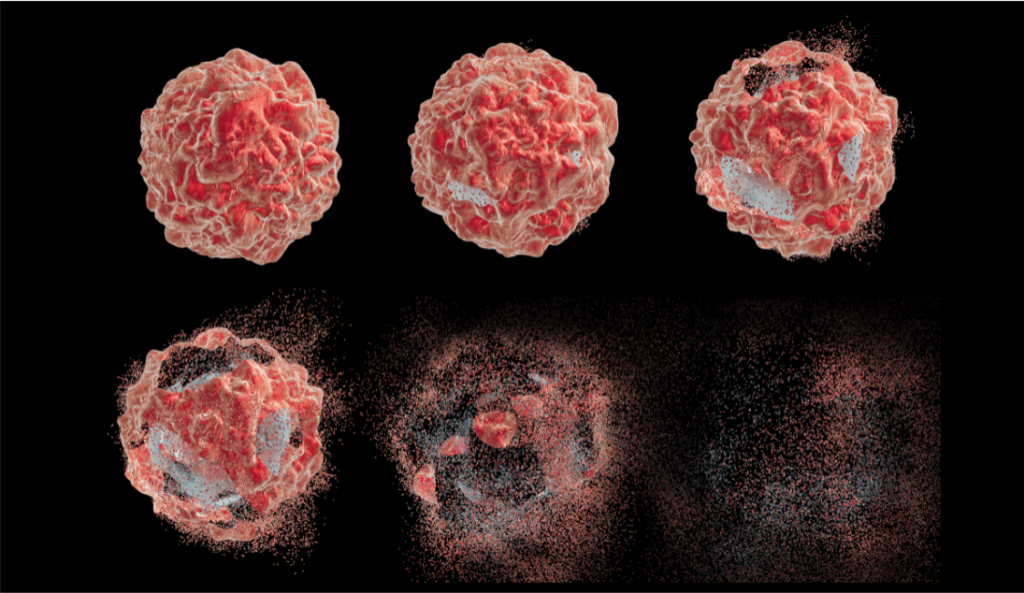
3D illustration of the stages of cell apoptosis.

The Trending with Impact series highlights Oncotarget publications attracting higher visibility among readers around the world online, in the news, and on social media—beyond normal readership levels. Look for future science news about the latest trending publications here, and at Oncotarget.com.

In the 1990s, Dr. Wafik El-Deiry’s cancer research laboratory discovered a gene that encodes a protein, called death receptor 5, or TRAIL receptor 2. TRAIL is a protein that induces the process of cell death, or apoptosis. This pathway activates the body’s innate immune system and is capable of suppressing cancer cells by inducing apoptosis. 

After this discovery, researchers from the same lab considered the notion that increasing the production of TRAIL to enhance the body’s own immune response may have a safe therapeutic benefit in the treatment of cancer. The team searched for small molecules capable of upregulating the TRAIL gene and discovered the therapeutic compound TIC10, also known as ONC201. ONC201 is a well-tolerated drug currently being evaluated in advanced clinical trials for the treatment of various malignant solid tumors, including refractory metastatic breast cancer.

Researchers in Dr. El-Deiry’s laboratory have continued to investigate this drug in order to learn more about how it works, and what tactics or combinations may be used to produce better results for cancer patients. In a 2016 study, the researchers learned that ONC201 produces heterogeneous results in different tumor types.

“The question is, with this specific drug, what is the pattern of response, what determines that, and how can we get it to work a little bit better,” Dr. El-Deiry said in a recent Oncotarget interview.

Based out of Temple UniversityFox Chase Cancer CenterBrown University, and the El-Deiry Cancer Research Laboratory, researchers wrote a paper detailing their latest study on ONC201. The paper was published by Oncotarget in 2020 and entitled, “TRAIL receptor agonists convert the response of breast cancer cells to ONC201 from anti-proliferative to apoptotic.”

THE STUDY

Led by first-author Dr. Marie Ralff, the researchers in this study found that ONC201 induces differential responses across various breast cancer tumor subtypes. Few breast cancers are responsive to TRAIL, and one subtype that is responsive to TRAIL is triple-negative breast cancer.

“We saw that in some of these tumor types (the triple-negative breast cancer type in particular) the compound was having a pro-apoptotic effect, and in other [breast cancer] tumor types, it was having an anti-proliferative effect,” said Dr. Ralff.

When comparing in vivo and in vitro results of the drug, the team found that the pro-apoptotic effects translated to efficacy, while the anti-proliferative effects did not. The researchers then decided to investigate strategies to convert breast cancer cell response to ONC201 from anti-proliferative to apoptotic. ONC201 affects two known mechanisms of TRAIL resistance in breast cancer: death receptor 5 and anti-apoptotic proteins. This fact led the researchers to introduce a TRAIL receptor agonist antibody in combination with ONC201.

“If we pretreat TRAIL resistant breast cancer cells with ONC201, the level of surface death receptor 5 goes up and the intracellular levels of anti-apoptotic proteins go down, thereby priming the cells to undergo death through the TRAIL pathway. So, if we then add in a TRAIL receptor agonist, it induces apoptosis in a very potent way,” Dr. Ralff said.

CONCLUSION

“The concept is when cells are treated with the small molecule compound, not a whole lot happens. When cells are treated with TRAIL, not a whole lot happens. When you put them together, it’s like flipping a switch. The cells now undergo potent cell death,” Dr. El-Deiry said.

The potential efficacy of this therapeutic combination was strengthened by results in the study showing that ONC201 paired with the TRAIL receptor agonist antibodies is non-toxic to fibroblasts. The researchers also showed that the natural killer cells are only active against the breast cancer cells that have been exposed to ONC201. In vivo studies reaffirmed the safety of this combination in mouse models.

Click here to read the full research  study, published by Oncotarget.

Oncotarget is a unique platform designed to house scientific studies in a journal format that is available for anyone to read—without a paywall making access more difficult. This means information that has the potential to benefit our societies from the inside out can be shared with friends, neighbors, colleagues, and other researchers, far and wide.

For media inquiries, please contact media@impactjournals.com.