
Tagged: Hepatocellular Carcinoma

Immunotherapy Safety for Hepatocellular Carcinoma in Latin America: Insights from a Real-World Study

Latin America has been underrepresented in trials evaluating immunotherapy for hepatocellular carcinoma (HCC).”

Liver cancer, especially hepatocellular carcinoma (HCC), remains a major health concern worldwide. In Latin America, the situation becomes more difficult due to limited access to advanced treatments and the high prevalence of underlying liver diseases. A recent research paper, published in Volume 16 of Oncotarget by researchers from Argentina, Brazil, Chile, and Colombia, offers valuable insights into how patients in the region respond to a widely used immunotherapy regimen. This real-world study explores both the effectiveness of treatment and the risks of immune-related side effects.

Understanding Hepatocellular Carcinoma: Why It is So Difficult to Treat

Hepatocellular carcinoma is often diagnosed at an advanced stage and frequently occurs in people with pre-existing liver conditions such as cirrhosis. Standard treatments like surgery or local therapies are not always possible in these cases. In recent years, the combination of two drugs—atezolizumab and bevacizumab—has shown promise in extending survival. However, most of the evidence comes from controlled clinical trials that may not represent the realities faced by healthcare providers and patients in Latin America.

The Study: Immunotherapy for Hepatocellular Carcinoma in Latin America

In a multicenter study titled Immune-mediated adverse events following atezolizumab and bevacizumab in a multinational Latin American cohort of unresectable hepatocellular carcinoma,” led by Leonardo Gomes da Fonseca from Hospital das Clínicas, Universidade de São Paulo, Brazil, and Federico Piñero from Hospital Universitario Austral, Argentina, researchers aimed to fill that gap. The study included 99 patients with advanced HCC from Argentina, Brazil, Chile, and Colombia. All patients received the combination of atezolizumab and bevacizumab. The main objectives were to assess how frequently immune-related side effects, known as immune-related adverse events (irAEs), occurred and whether these events affected overall survival.

The Results: Immune-Related Adverse Events

Immunotherapy works by boosting the immune system to fight cancer. However, this can also lead to unintended effects where the immune system attacks healthy tissues. These irAEs can range from mild symptoms to serious conditions like liver inflammation, which can be particularly dangerous for patients whose liver function is already damaged.

In this study, the median overall survival was 17 months, a result consistent with international clinical trials. About 18% of patients developed irAEs, most commonly hepatitis, thyroiditis, and nephritis. Nearly half of these cases required medical treatment such as corticosteroids. Even so, only about half of the irAEs were completely resolved. Importantly, the occurrence of irAEs did not appear to reduce overall survival, suggesting that while these side effects require attention, they are manageable.

An additional finding was that patients with higher levels of alpha-fetoprotein (AFP), a marker often used to assess liver cancer severity, were more likely to develop irAEs. This could help clinicians identify which patients need closer monitoring during treatment.

Implications for Hepatocellular Carcinoma Care in Latin America

This is one of the few studies assessing how HCC patients in Latin America respond to immunotherapy in everyday clinical settings. The results support the use of atezolizumab and bevacizumab in the region but also point out the importance of being prepared to detect and manage side effects. Building medical capacity for early identification and treatment of irAEs is especially important for patients with weaker liver function.

Future Perspectives and Conclusion

Although immune-related side effects did not seem to affect survival in this study, they add another layer of complexity to HCC treatment. More research is needed to understand which patients are most at risk and how to prevent these side effects. For the moment, this study provides useful information for clinicians and healthcare systems aiming to safely expand access to immunotherapy in Latin America for HCC.

Click here to read the full research paper in Oncotarget.

_______

Oncotarget is an open-access, peer-reviewed journal that has published primarily oncology-focused research papers since 2010. These papers are available to readers (at no cost and free of subscription barriers) in a continuous publishing format at Oncotarget.com

Oncotarget is indexed and archived by PubMed/Medline, PubMed Central, Scopus, EMBASE, META (Chan Zuckerberg Initiative) (2018-2022), and Dimensions (Digital Science).

Click here to subscribe to Oncotarget publication updates.

For media inquiries, please contact media@impactjournals.com.

How a Metabolic Enzyme Can Trigger Cell Death in Liver Cancer Cells

In a new editorial paper, researchers highlight the role of GLS2 in regulating ferroptosis in hepatocellular carcinoma.

Hepatocellular carcinoma (HCC) is the most common type of liver cancer. It is particularly challenging to treat because HCC is often diagnosed in late stage and resistant to chemotherapy and radiation. However, advancements in targeted therapies and immunotherapies have opened new avenues for the treatment of this aggressive disease.

In a new editorial paper, researchers Sawako Suzuki, Divya Venkatesh, Tomoaki Tanaka, and Carol Prives from Columbia University highlight the role of a metabolic enzyme known as glutamine synthase 2 (GLS2) in regulating ferroptosis in HCC. Ferroptosis is a form of cell death that involves iron-dependent accumulation of lipid peroxides. On October 19, 2023, their editorial was published in Oncotarget, entitled, “GLS2 shapes ferroptosis in hepatocellular carcinoma.”

GLS2 Promotes Ferroptosis in HCC 

GLS2 is a key enzyme that catalyzes the conversion of glutamine to glutamate, a precursor of alpha-ketoglutarate (αKG), a molecule that participates in several metabolic pathways, such as the tricarboxylic acid (TCA) cycle, redox homeostasis and lipid and amino acid metabolism. GLS2 is also a transcriptional target of the tumor suppressor protein p53, which regulates its expression in response to cellular stress.

In this editorial, the researchers summarize findings from their recent study, which demonstrated that GLS2 is a bona fide tumor suppressor and a regulator of ferroptosis in HCC using mouse models and human cancer cells. The team showed that GLS2 deficiency leads to increased HCC tumorigenesis and resistance to ferroptosis, while GLS2 overexpression reduces tumor growth and sensitizes cancer cells to ferroptosis.

The mechanism by which GLS2 promotes ferroptosis involves its catalytic activity, which facilitates the production of αKG from glutamate. αKG then enhances lipid reactive oxygen species (ROS) generation by inhibiting the activity of glutathione peroxidase 4 (GPX4), an enzyme that protects cells from lipid peroxidation. Thus, GLS2 acts as a metabolic switch that favors ferroptosis by increasing lipid ROS levels.

“Our work has now provided evidence that GLS2 is mainly localized in mitochondria and induces ferroptosis through α-ketoglutarate (αKG), and this occurs specifically under conditions where the levels of GSH [glutathione] or of glutathione peroxidase 4 (GPX4) are suppressed by ferroptosis inducers [7].”

Conclusions

The authors also provided evidence that GLS2-mediated regulation of ferroptosis has clinical relevance for human HCC. They found that GLS2 expression is frequently downregulated in human HCC samples and correlates with poor prognosis. Moreover, they showed that GLS2 expression is associated with sensitivity to erastin, a ferroptosis-inducing agent, in human HCC cell lines.

These results suggest that GLS2 is a potential therapeutic target for HCC and that its modulation could enhance the efficacy of ferroptosis-based therapies. The editorial paper concludes by discussing the challenges and opportunities for further research on the role of GLS2 and ferroptosis in liver disease.

“If indeed GLS2 can promote chemically-induced ferroptosis irrespective of the tissue type, then the drug regimen will need to be tailored such that the liver tissues adjacent to HCC are protected. Taking these concerns into consideration, we hope that our findings will inform future decisions regarding treatment of liver disease.”

Click here to read the full editorial paper in Oncotarget.

Oncotarget is an open-access, peer-reviewed journal that has published primarily oncology-focused research papers since 2010. These papers are available to readers (at no cost and free of subscription barriers) in a continuous publishing format at Oncotarget.com. Oncotarget is indexed/archived on MEDLINE / PMC / PubMed.

Click here to subscribe to Oncotarget publication updates.

For media inquiries, please contact media@impactjournals.com.

Plasma Growth Hormone in HCC: A Biomarker of Response to Atezo/Bev?

In a new study, researchers investigated the plasma growth hormone as a potential biomarker of response to atezolizumab and bevacizumab in advanced hepatocellular carcinoma patients.

Plasma Growth Hormone in HCC: A Biomarker of Response to Atezo/Bev?

The Trending With Impact series highlights Oncotarget publications attracting higher visibility among readers around the world online, in the news, and on social media—beyond normal readership levels. Look for future science news about the latest trending publications here, and at Oncotarget.com.

Listen to an audio version of this article

Hepatocellular carcinoma (HCC) is a highly aggressive cancer of the liver with a very poor prognosis; many patients pass away within a year of diagnosis. Currently, there is no effective screening method for HCC and thus, 80% of patients are diagnosed at advanced stages. This makes treatment difficult and often unsuccessful. As a result, new treatments for HCC are constantly being explored.

Atezolizumab and bevacizumab are two standard therapies used to treat unresectable, advanced HCC. However, researchers Yehia I. Mohamed, Dan G. Duda, Muhammad O. Awiwi, Sunyoung S. Lee, Lina Altameemi, Lianchun Xiao, Jeffrey S. Morris, Robert A. Wolff, Khaled M. Elsayes, Rikita I. Hatia, Aliya Qayyum, Shadi M. Chamseddine, Asif Rashid, James C. Yao, Armeen Mahvash, Manal M. Hassan, Hesham M. Amin, and Ahmed Omar Kaseb from MD Anderson Cancer Center, Massachusetts General Hospital, Harvard Medical School, Michigan State University, and University of Pennsylvania Perelman School of Medicine noticed a significant gap in research on biomarkers of response in advanced HCC patients treated with atezolizumab plus bevacizumab. The team conducted a new study aimed at beginning to close this gap. On December 6, 2022, their research paper was published in Oncotarget’s Volume 13, entitled, “Plasma growth hormone is a potential biomarker of response to atezolizumab and bevacizumab in advanced hepatocellular carcinoma patients.”

“This study investigated the biomarker value of plasma growth hormone (GH) level as a potential biomarker to predict outcome in unresectable HCC patients treated with current standard therapy, atezolizumab plus bevacizumab (Atezo/Bev).”

The Study

Plasma growth hormone (GH) is a potential biomarker that had not previously been evaluated in relation to this treatment regimen in HCC before. In this study, the researchers included 37 patients with advanced HCC. The patients received atezolizumab plus bevacizumab at the MD Anderson Cancer Center between June 2018 and November 2021. The median age of the patients was 67 years old, and the vast majority were male (83.8%). 

The team measured plasma GH levels, progression-free survival (PFS) and overall survival (OS). Plasma GH levels were measured by ELISA and used to stratify the HCC patients into GH-high and GH-low groups. The Kaplan-Meier method was used to calculate median OS and PFS. The Log-rank test was used to compare survival outcomes between GH-high and -low groups.

“To the best of our knowledge, this is the first study to assess clinical prognostic value of plasma GH level in patients who have received atezolizumab plus bevacizumab in clinical setting.”

The results of the study showed that plasma GH levels significantly correlated with OS. At the time of the analysis, the one-year survival rate was 70% among GH-low patients and 33% among GH-high patients. OS was significantly superior in GH-low compared to GH-high patients. PFS showed a non-significant trend in favor of GH-low patients compared to the GH-high group.

Conclusion

“Despite the small data size, plasma GH levels were strongly predictive of the disease outcome in patients treated with Atezo/Bev.”

The study concluded that plasma GH levels may be a promising biomarker for predicting response to atezolizumab plus bevacizumab in advanced HCC patients. Further, plasma GH levels may be used to stratify advanced HCC patients into high- and low-risk groups. The researchers recommend further research in larger scale and different populations to validate the findings and explore plasma GH levels as a potential biomarker of response to this treatment regimen in HCC.

“In conclusion, our study demonstrate[s] that plasma GH represents a candidate biomarker for predicting treatment outcomes in patients with advanced HCC treated with Atezo/Bev. Future studies in larger randomized clinical trial and with a more diverse ethnic, race, and gender background are warranted to further validate these findings.”

Click here to read the full research paper published by Oncotarget

ONCOTARGET VIDEOS: YouTube | LabTube | Oncotarget.com

Oncotarget is an open-access journal that publishes primarily oncology-focused research papers in a continuous publishing format. These papers are available at no cost to readers on Oncotarget.com. Open-access journals have the power to benefit humanity from the inside out by rapidly disseminating information that may be freely shared with researchers, colleagues, family, and friends around the world.

For media inquiries, please contact media@impactjournals.com.
Trending with Impact: Composite Score May Further Classify HCC

In this trending study, the association between IGF/CTP composite scores, overall survival, and progression-free survival of hepatocellular carcinoma patients treated with sorafenib was investigated.

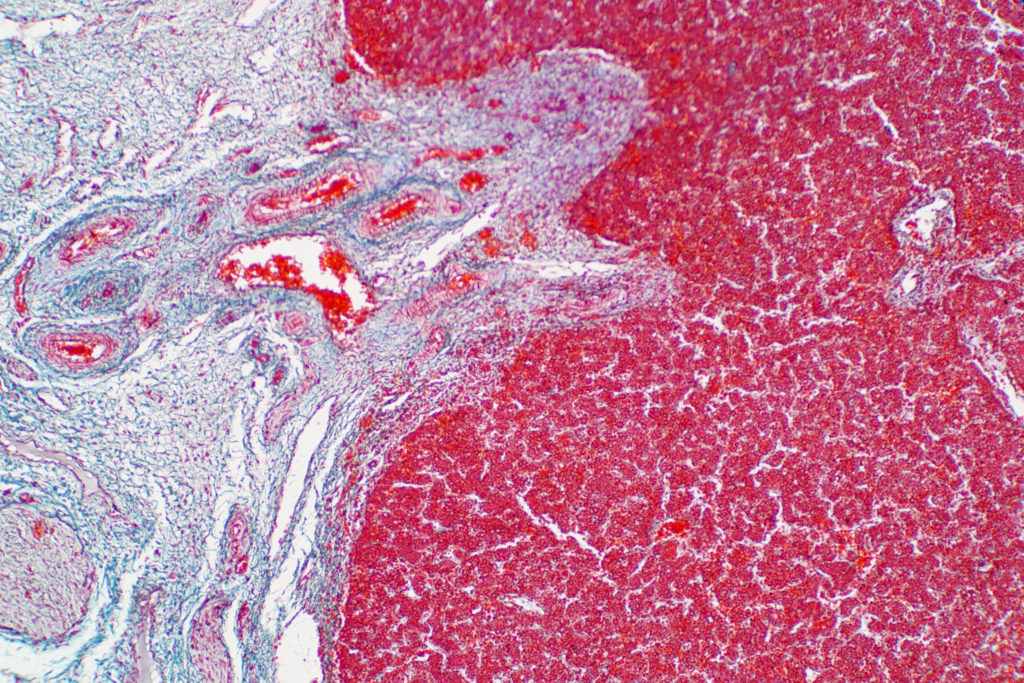
Human liver tissue under the microscope view.

The Trending with Impact series highlights Oncotarget publications attracting higher visibility among readers around the world online, in the news, and on social media—beyond normal readership levels. Look for future science news about the latest trending publications here, and at Oncotarget.com.

Listen to an audio version of this article

Sorafenib was the first systemic therapy approved to treat Child-Turcotte-Pugh (CTP) class A patients with advanced hepatocellular carcinoma (HCC). However, there are no biomarkers known to predict survival, treatment outcomes, or to guide this HCC systemic therapy. The insulin-like growth factor 1 Child-Turcotte-Pugh (IGF-1/CTP) composite score has emerged as a hepatic reserve assessment tool—and potential prognostic biomarker.

“Accurate assessment of the functional hepatic reserve is important to the prognostic and treatment prediction for patients with liver disease [12].”

Researchers from the University of Texas MD Anderson Cancer CenterMassachusetts General Hospital, and Harvard Medical School conducted a study to assess the association of the IGF/CTP score with overall survival (OS) and progression-free survival (PFS) of HCC patients treated with sorafenib. Their paper was published in Oncotarget’s Volume 12, Issue 8 and entitled, “Insulin-like growth factor 1/Child-Turcotte-Pugh composite score as a predictor of treatment outcomes in patients with advanced hepatocellular carcinoma treated with sorafenib.”

The Study

The majority of circulating insulin–like growth factor (IGF) is synthesized and secreted by the liver, and levels of IGF dramatically decrease in chronic liver disease and HCC. IGF can be a helpful tool to determine the prognosis of patients with advanced HCC while undergoing treatment with sorafenib. Researchers also use the Child-Turcotte-Pugh (CTP) qualitative scoring system to assess severity of liver cirrhosis, hepatic reserve, guide treatment decisions, and to stratify patients with HCC into three groups (A, B, and C). CTP class A has a better prognosis compared to classes B and C.

“Assessing liver reserve in HCC is of a great value as a tool for stratification of patients in clinical trials as well as to predict HCC outcome and guide therapy decisions in routine practice [28].”

In the researchers’ prospective study, 171 patients with HCC from the University of Texas MD Anderson Cancer Center were screened and included in this study. Of the patients, 116 were classified in CTP group A. Patient IGF/CTP scores were calculated and the researchers used the Kaplan-Meier method and log-rank test to estimate and compare the time-to-event outcomes between patient subgroups. Based on CTP and the IGF/CTP scores, researchers reclassified group A patients into AA and AB risk groups, which differed significantly in terms of OS and PFS. The researchers followed up with all patients in the study until disease progression or death. Unfortunately, during the follow-up period, 100 patients passed away.

“After IGF/CTP scoring, 87 of 116 CTP class A patients were reclassified as IGF/CTP-A (AA) and 29 patients were reclassified as IGF/CTP-B (AB) (Supplementary Table 1).”

Results & Conclusion

“Our study is the first prospective validation of the IGF/CTP scoring system association with the outcomes among patients with HCC treated with sorafenib.”

This study supported the researchers’ hypothesis that the IGF/CTP score is capable of further distinguishing and refining CTP class A patients. However, for CTP class A patients, due to limited power of the study, researchers were unable to meet the threshold for statistical significance for the OS and PFS durations of the reclassified groups AA and AB.

“Although our study was not powered to determine the predictive value of the IGF/CTP score in regard to median OS and PFS durations in CTP class A patients treated with sorafenib, our subset analyses of OS and PFS at different timepoints were statistically significant and, if independently validated, could change the standard approach to assessing hepatic reserve in patients with HCC.”

Click here to read the full scientific study, published by Oncotarget.

Oncotarget is a unique platform designed to house scientific studies in a journal format that is available for anyone to read—without a paywall making access more difficult. This means information that has the potential to benefit our societies from the inside out can be shared with friends, neighbors, colleagues, and other researchers, far and wide.

Oncotarget is a proud participant of the AACR Annual Meeting 2021 #AACR21

For media inquiries, please contact media@impactjournals.com.

Trending with Impact: Hepatocellular Carcinoma in The Andes Mountains

Young people living in the Andes Mountains are disproportionately affected by hepatocellular carcinoma compared to other youth around the world. Researchers conducted a study to better understand the cause.

Peru. View of the Urubamba River through the Aguascalientes Village.

The Trending with Impact series highlights Oncotarget publications attracting higher visibility among readers around the world online, in the news, and on social media—beyond normal readership levels. Look for future science news and articles about the latest trending publications here, and at Oncotarget.com.

Listen to an audio version of this article

Andean people live in sparsely populated regions in the Andes Mountains of South America. It is the longest mountain range in the world; spanning seven countries from southern Peru to southern Argentina. Due to the high elevations (averaging 13,000 feet; peaking at 22,834 feet), these areas are known for such low oxygen levels that Andean people have adapted physiologically to the extreme conditions.

Around the world, hepatocellular carcinoma (HCC) is the main form of primary liver cancer and commonly affects older patients after they have had prolonged liver disease. However, among Andean people, half of the total patients who develop HCC are adolescents and young adults. Researchers—from Sorbonne Université, Institut Pasteur, Université de Rennes, and Université de Toulouse in France, and the Instituto Nacional de Enfermedades Neoplásicas in Peru—conducted a study to better understand HCC in Andean people.

“To deepen our understanding of the molecular determinants of the disease in this population, we conducted an integrative analysis of gene expression and DNA methylation in HCC developed by 74 Peruvian patients, including 39 adolescents and young adults.”

The Study

“The 74 Peruvian patients with HCC included in the present study carried mitochondrial DNA (mtDNA) haplotypes of the four ancestral lineages (A–D) shared by Indigenous American populations (Figure 1A and Table 1) [23].”

The researchers retrospectively conducted transcriptome profiling of patient samples from 74 Peruvian patients with HCC. They compared gene expression data (after batch-effect removal) and found that Peruvian HCC is characterized as a distinct molecular subtype. This, now referred to as the “Amerind signature,” identifies Peruvian HCC as a distinct phenotypic cluster.

“A 961 gene signature was defined (hereinafter referred to as “Amerind signature”), of which 806 were upregulated and 155 downregulated in Peruvian HCC (Figure 3A and Supplementary Table 4).”

Methylome profiling was also conducted by the researchers to show the dynamics of DNA methylation marks, which revealed that Peruvian HCC is associated with a genome-wide hypermethylation pattern. They explain that DNA hydroxymethylation also represents a relevant epigenetic mark in Peruvian HCC. In addition, the researchers found evidence that Peruvian HCC tumor cells have a weaker retinoid signaling signature, which opens the door to potential therapeutic targets.

“The genomic analysis of Peruvian HCC evidenced a weaker retinoid signaling signature in tumor cells, which could pinpoint novel targets and drugs for anticancer targeted therapy (Figure 1C and Supplementary Table 1) [45]. We hypothesized that this weaker retinoid signaling could be responsible for the increased proliferation; hence, the pharmacological response to RA should antagonize this process.”

Conclusion

After comparing this sample of patients with Peruvian HCC with other HCC tumors from other countries around the world, molecular divergence in Peruvian HCC was demonstrated by showing “hierarchical clustering relying on a large and meaningful gene expression signature.” The researchers do not yet know if these differences are due to external/geographic or genomic factors.

“Whether this molecular phenotype is due to anthropological specificities embedded in genome architecture, to extrinsic etiological cues, or to subtle interplays between both components remains to be ascertained.” 

With this being said, the researchers believe that this study stresses the need to carefully consider the potentially prominent roles of human genomic architecture and biogeography when it comes to cancer and underreported minorities and Indigenous patients, especially in low- and middle-income countries. They are forthcoming about limitations in their study and mention having analyzed a fairly small sized cohort. Importantly, the findings from this study create a case for developing therapeutics that are tailored to this new molecular subtype of HCC.

 “The present study establishes a foundation for the dissection of the functional importance of RA-mediated epigenetic control in HCC and therapeutics tailored to patients with Indigenous American ancestry.”

Click here to read the full scientific study, published in Oncotarget.

Oncotarget is a unique platform designed to house scientific studies in a journal format that is available for anyone to read—without a paywall making access more difficult. This means information that has the potential to benefit our societies from the inside out can be shared with friends, neighbors, colleagues and other researchers, far and wide.

For media inquiries, please contact media@impactjournals.com.